Qualifying Conditions for Medical Cannabis: How States Define Them
Qualifying conditions determine the eligibility of the patient to participate in the state program. This varies from one state to another. Some states have specific qualifying conditions that are accepted by the state program, while others have a general qualifying condition that is defined as debilitating by a physician. Knowing the conditions that qualify for the state program will be essential in ensuring the documentation is prepared and a more productive conversation is held with the physician.
Specific Qualifying Conditions and Catch All Conditions
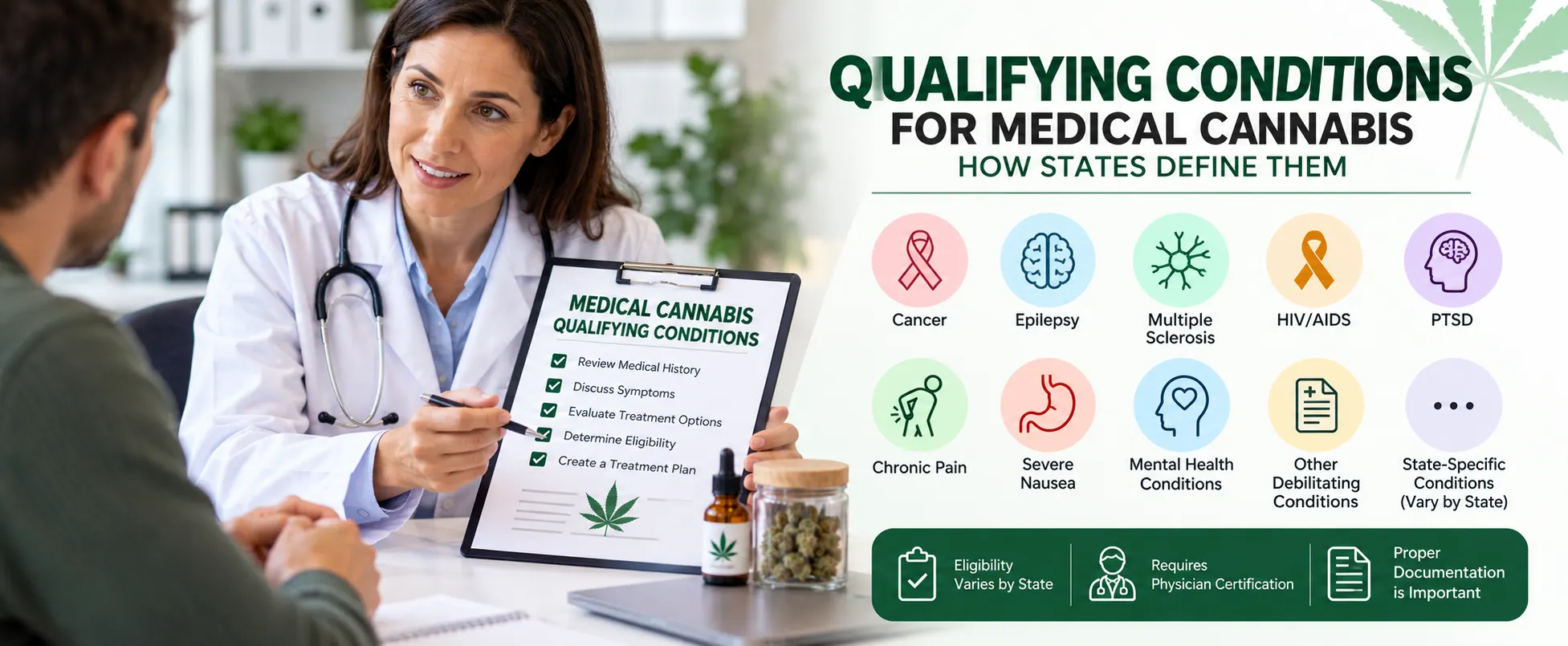
Some of the state programs have specific qualifying conditions such as cancer, epilepsy, multiple sclerosis, HIV/AIDS, PTSD, chronic pain, and severe nausea. While others include a catch-all condition where a physician can determine a debilitating condition. A catch-all condition gives physicians discretion but might require thorough documentation. Some of the state programs regularly update their conditions through regulations.
Chronic Pain and Mental Health Conditions
Other conditions that occur quite often in state registries are chronic pain and some mental illnesses, all of which are still debatable. Pain is a very complex symptom, and the way it can be treated varies according to the reason, intensity, of pain, and effectiveness of other treatments. Likewise, mental disorders are complex and require a lot of research. Trials on cannabis for the treatment of pain and mental illnesses are still being conducted; their results depend on the form, dosage of medication, and the patient himself. Your physician will provide information on the existing scientific data and possible side effects.
Research Findings
Scientific research exists about the use of cannabis-based drugs only for a few disorders. The FDA has already approved the use of some cannabinoid medications: a pure cannabidiol drug that helps to deal with seizures and a compound of two synthetic cannabinoids that alleviate nausea after chemotherapy. Some other uses of marijuana that are found in state programs are scientifically backed but not so strongly, some trials providing controversial results., Do not trust people who claim to cure a disease with cannabis; look for systematic reviews.
Documentation a Clinician May Request
Before getting certified by a physician, there should be an analysis of medical records, past treatment and testing. Having all information in a proper file including diagnoses, medications list, specialist letters, imaging will make the process of certification easier for the doctor. Remember to be completely honest and accurate while providing information about the symptoms and past treatment because being informed about all the aspects is crucial for proper certification. Otherwise, there is a chance of delay of the certification procedure or misdiagnosis in your case.
Risks and Drug Interaction
Taking cannabis may have negative effects on the patients who take certain medications for anxiety disorders, sleep disorders, seizures, and blood thinning. What is more, taking cannabis may put at risk people suffering from some types of heart disease, people who experienced psychotic episodes and pregnant or breastfeeding women. It is important to tell your doctor about all medications and dietary supplements which you are using right now. Also, do not forget to ask about your ability to drive a car because it may affect your driving skills.
Established Treatments Should Be Discussed
In receiving the recommendation from a certifying clinician, it is also possible to say that a clinician should address all therapies which are available for a patient in addition to cannabis. For example, those people who experience chronic pain can use physical therapy, interventional procedures, and some medications. If there is any issue with mental well-being of a patient, he/she may use psychotherapy and prescribed medications. Moreover, the usage of cannabis becomes one of the elements of treatment plan which is created by a clinician.
Cannabis Certification for Minors and the Elderly
There exist some programs according to which a person can obtain the certificate of cannabis even though he/she is minor. In this situation, it is necessary to talk about some specific aspects related to the differences between adults and children. Firstly, in case of pediatric certification, the consent of the parents or legal guardians should be obtained, and a child’s development, school and access to treatment should be considered. Secondly, it is important to note that elderly patients usually use various medications, and the risks of side effects and interactions become higher.
Reading Clinical Evidence Responsibly
Medical Marijuana Card Montana has been shown to provide health benefits according to many articles, but this is based on one study. The discerning reader will, analyze the sample size, methodology, group being tested, dosage, conflict of interests among others when analyzing the study. The best studies to use are the randomized controlled trials and not case studies or testimonies; meta-analyses are better since they analyze several studies. Analyze what was tested since it may show that there were improvements in symptom scores without improvements in functionality. If the physician shows you the evidence, ask him about the validity of the evidence and gaps.
Keeping a Usage Diary
People who use different types of products need to keep a simple list of the products being used, the quantity and the effect observed. Such list will enable people to establish certain trends which may be helpful in renewals.
Wrapping Up
The qualifying criteria will be used to determine whether a person qualifies or not. The criteria are not always similar from one state to another. Make sure you know the criteria for being a patient in your state, get medical records, and talk to a licensed professional about the evidence and risks involved.
Understanding your state's qualifying conditions and preparing accurate medical records can help you have a more informed conversation with your healthcare professional.
Recent Posts
-
Renewing and Maintaining Your Medical Cannabis Card
24 Oct, 2026