Medical Cannabis Card Holders: Employment, Travel and Federal Law
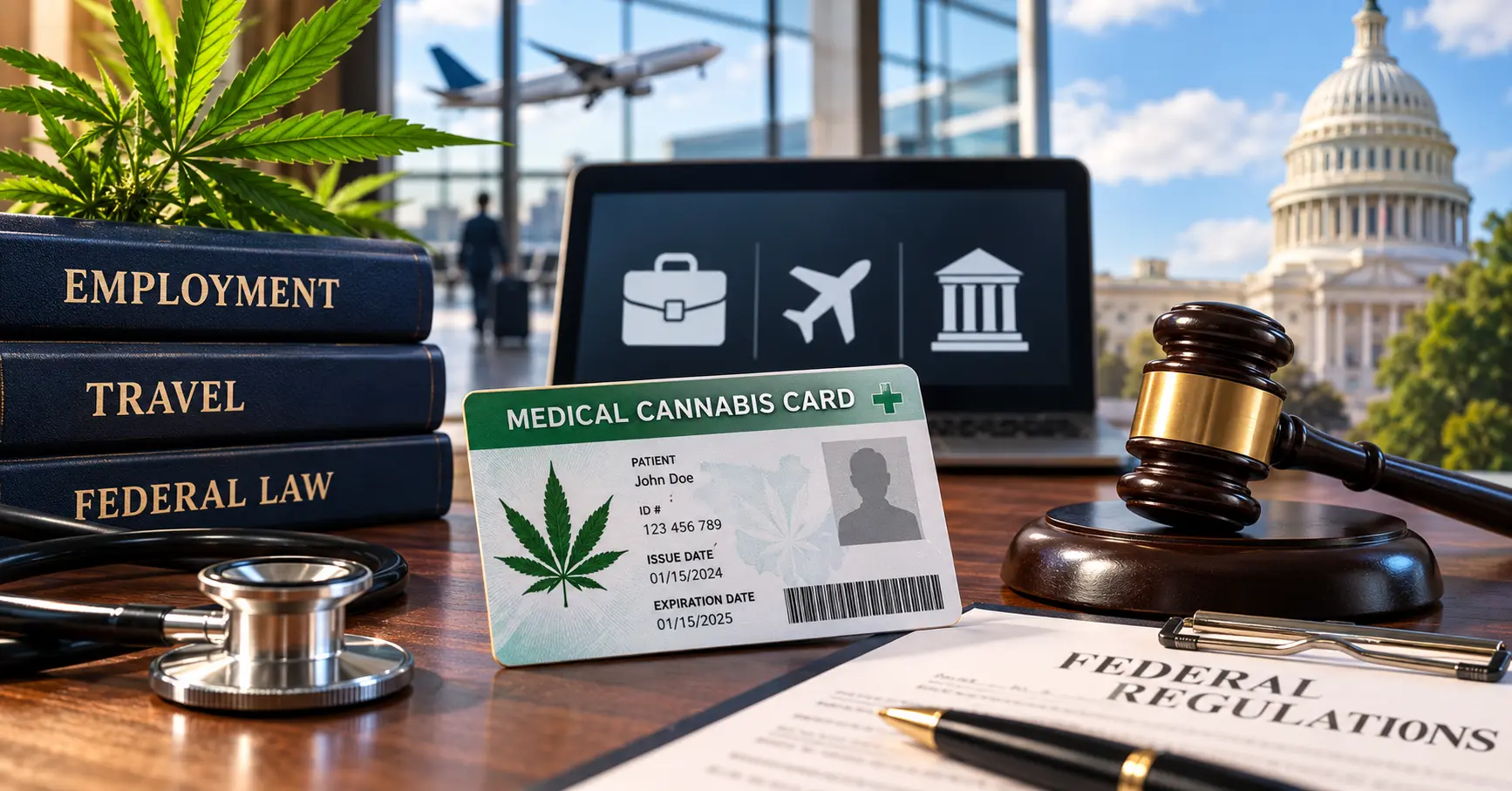
In essence, a medical marijuana card acts as your legal umbrella depending on the state laws in different situations; nevertheless, your legal umbrella is not as expansive as you would like it to be. Marijuana remains a Schedule I drug according to the federal law up to now. There are policies put in place by employers, federal government departments, and transportation organizations concerning marijuana usage. As the policy is constantly being reviewed at the federal level, it is imperative for you to be aware of its current status.
Employment and Drug Testing
Although there may be some states that protect the user of medical marijuana from discrimination, this is not the case everywhere. While discrimination may not be an issue, the employer can maintain his right to have a drug-free environment. Drug testing before employment and random tests will pick up traces of cannabis metabolites even weeks after using the substance. Make sure you know about the policy of the organization, as well as the state employment laws, before disclosing your condition.
Safety Sensitive & Federally Regulated Occupations
Occupations involving transportation, air traffic control, certain jobs within the health care industry, government contractors, and military service are regulated by the federal agencies that do not acknowledge state programs for the medical use of the substance. Individuals in such occupations would be asked to take drug tests and would be removed from their jobs regardless of the possession of the state card.
Driving and Impairment
Driving under the influence of marijuana is against the law everywhere, irrespective of whether you have a medical marijuana card or not. Different states have their own methods to test marijuana use by drivers and impairment caused by cannabis. Drivers may be asked to undergo field sobriety tests as well as laboratory tests. It takes many hours after using marijuana before being considered impaired and unable to drive safely. Never drive after using cannabis and talk to your doctor about transportation alternatives.
Medical Marijuana Card on Travels
Medical marijuana card issued by one state will usually be valid only in the issuing state itself, and most of the states do not honor medical marijuana cards issued by any other state. Crossing from one state to another with cannabis is against the law because the transportation of cannabis is a federal offense even if two states legalize its use. The problem becomes more complicated when flying because of the federal security at airports.
Housing and Public Spaces
Driving under the influence of cannabis is illegal everywhere without any exceptions despite the existence of a medical marijuana card. Each state uses various ways of testing the use of marijuana by drivers and their impairment because of it. Field and laboratory sobriety tests may be conducted for drivers. Many hours should pass after the use of cannabis to be considered intoxicated enough to be unable to drive properly. Never drive after using cannabis and consult your doctor about other means of traveling.
Medical Marijuana Card on Travels
The medical marijuana card that was issued in one state will be valid in the issuing state and, in most cases, not in any other state. Transporting cannabis between two states is prohibited despite legalizing it in both states because the transportation of cannabis is prohibited at the federal level. Flying becomes more complicated because of federal control at the airport.
Keeping Informed About Changing Rules
It is common for cannabis laws to get revised frequently at both federal and state levels. Sign up to receive alerts regarding changes to the program in your state, subscribe to trustworthy news sites and publications for cannabis laws and regulations, and check your own situation in case there is any new law that gets enacted. Information that was valid one year ago may not be up to date anymore; hence, you need to check all the requirements.
Disclosing Cannabis Usage at Workplaces
Deciding to disclose the use of cannabis for medical purposes rests upon you as an individual and also has repercussions as far as work is concerned. Before making a disclosure, ensure that you look through the written policies of the workplace and also whether you have a workplace handbook. Check if there is any process by which you can make a request for a reasonable accommodation. While making the decision to disclose, consider doing it in writing and giving only the necessary information.
Insurance, Benefits and Financial Impacts
Medicinal uses of cannabis are not typically insured through regular health insurance and can be considered in terms of insurance underwriting and claims by some insurance companies. Cannabis usage questions can be asked on the forms for applying for life, disability, and long-term care insurance. Check your insurance policy for details before making a purchase and answer honestly on your insurance application form. Discuss this issue with both the insurance company and healthcare provider before incorporating cannabis into your treatment regimen.
Court Records and Legal Proceedings
In situations when you find yourself involved in a legal proceeding that has something to do with custody problems, personal injuries, or traffic laws, your identity as a user of medicinal marijuana will definitely come into question. The criteria by which legal judgments are made differ from court to court; therefore, possession of a medicinal marijuana card does not mean automatic protection from a negative verdict. You need to consult a lawyer before you make any kind of disclosure concerning your identity through documentation or testimony in court. Your documentation needs to be in order because it could be needed later on. It is important not to make any informal disclosures in connection with cannabis use outside the attorney-client privilege. Legal determinations greatly depend on the specifics of each case.
Probation, Parole and Supervision
Even if you are on probation and parole, the possibility exists that your terms and conditions of supervision will prohibit the use of cannabis despite having your medical card. The violation of such terms and conditions will be independent of your criminal case. You need to ensure that you are familiar with your conditions in written form, seek help from your officer/attorney, and get consent for using the drug. Assumptions can cost you.
Medical Records and Privacy
You need to be informed that your cannabis certification forms a part of your medical records, which are usually subject to privacy laws. Before showing your medical card to your future employer, landlord, and insurance company, you need to find out what information they require. At times, all that they require is verification or just knowledge that you have the card.
Conclusion
A medical marijuana card Montana has some perks as per the laws of states, but one needs to realize that this does not override the laws of the federal government and also the policies of employers and various other municipal laws. Know about the rules governing your profession, accommodation, and travel, and read the current laws of the federal and state governments.
A medical marijuana card may provide legal protections under state law, but it does not automatically exempt patients from federal restrictions, workplace drug testing policies, or interstate transportation laws. Understanding your rights and responsibilities is essential.