Medical Cannabis Card Versus Adult Use: Understanding the Differences
In places where cannabis is legalized for adult use, a consumer does not require a medical recommendation to buy the products. In such states, there may be both medical and adult-use cannabis programs. Also, it is possible to come across a medical program in places where recreational cannabis is not legalized. There are different rules and characteristics that differ between the medical programs. The knowledge about these differences can be helpful in understanding whether a medical card is beneficial for you.
Age and Access
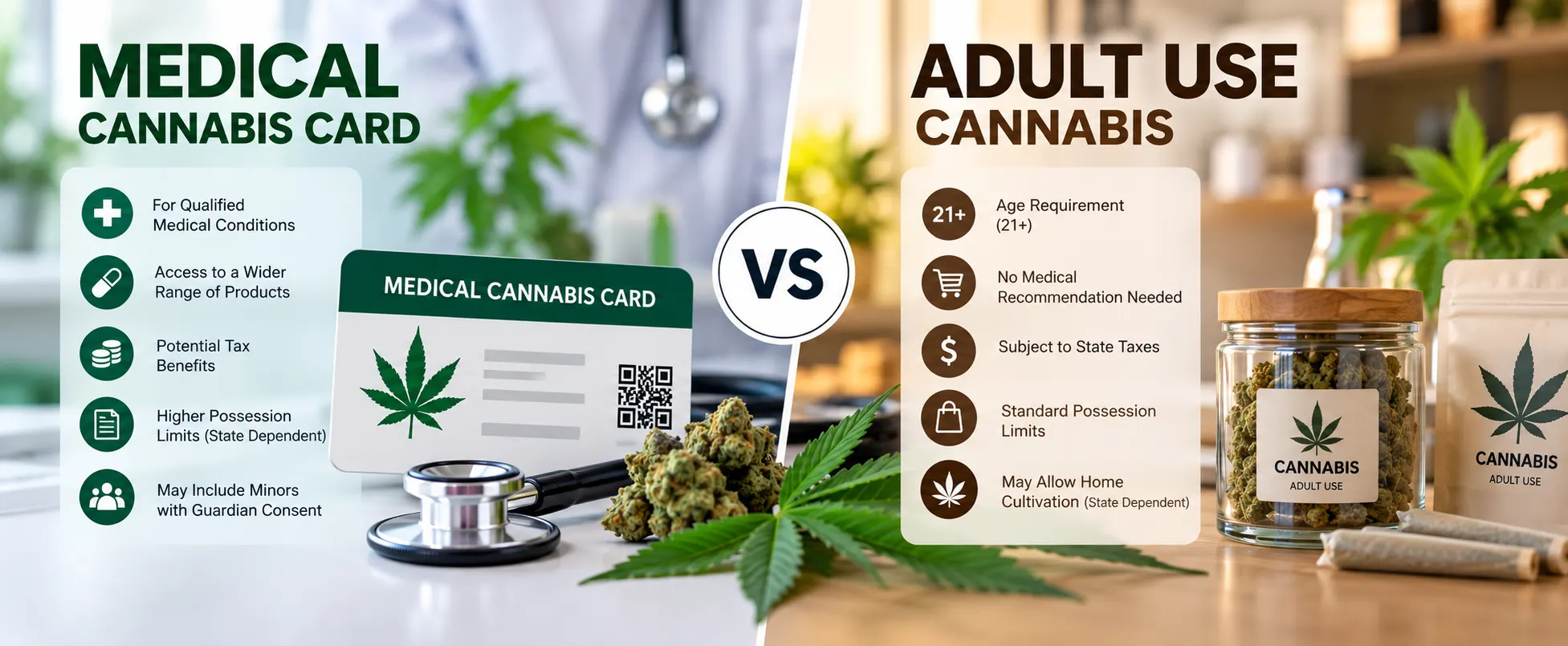
The age requirement in adult use programs is usually 21 or more years. However, the medical programs may include minors, who obtain consent from parents or caregivers to become members of the program. This means that a medical card can be useful when the adult use of cannabis is not legalized in the state. Furthermore, a medical card may provide access to some products and dispensaries, where access without a medical card is impossible.
Product Range and Potency
These programs can offer different products from those used for adults in general. These products might be more potent or even products that have medical use in the medical field. All this depends on where one visits because of the dispensaries which keep different medical stocks. It is always advisable to ask what products are available currently.
Taxation and Cost
There are certain states where there is no tax on purchasing cannabis for medical use. Therefore, one can purchase this product at a lower price compared to an adult purchasing the same quantity of cannabis. There are other states where there is no difference in the tax. The rules of tax exemption keep changing.
Possession Limits
The quantity of medical cannabis available can even exceed the one available to an adult use buyer. This limit may be applied on flower, concentrate, edibles, and even on home grown plant. Crossing such limits is not going to remain unnoticed, and so it is important to know your limit prior to purchasing anything.
Costs and Administration
Acquiring a Medical Marijuana Card in Montana involves some financial costs due to fees for the certification process, for application, and for renewal. All these costs tend to accumulate significantly when a visit to the doctor becomes obligatory for each renewal process. No paperwork is needed in case of adult use, but there are some taxes involved along with fewer options.
Limits of Each System
It is important to note that having a medical marijuana card does not mean that the holder has the freedom to indulge in illegal activities like driving while under the influence of drugs and also using the substance in public where its usage is not permitted. The adult-use purchase does not come with the same documentation that comes with the medical card in a hospital environment. Always ensure that you have your card and certificate whenever you go shopping for the substance in medical dispensaries.
Reciprocity and Travel
Many states do not recognize medical marijuana cards from other states and even refuse any visitors from making purchases of medical marijuana. It is important to be conversant with the laws in the new state before traveling.
Choosing the Right Route
This will depend on your location, needs, and your budget. Consider the age requirement, products, tax exemption, limits, and administrative costs in your state. In case you have a medical condition and there is a certified practitioner near you, then a medical card might serve you better than an adult use card. In case the benefits of a medical card are not relevant to you, then an adult use card will serve you better.
Requirements for Documenting Each Method
The adult use purchase is mostly based on age verification. The age verification is done at the time of purchase. For the medical card, it requires a valid card, and some dispensaries require your identification to match the card. There might be other documents that you will require as a medical patient to be exempted from paying taxes or getting an increased limit. Having both your card and government ID with you always helps a lot.
Home Cultivation and Personal Grows
Some states allow adults to grow a particular amount of plants at home, but there are some that either prohibit such activities or legalize them for registered patients only. Rules about the quantity of plants that one grows, sizes, rules for security, and whether the plants should be hidden can be created. Registered patients will have different rules than other patients from the same state. Failure to abide by these laws might lead to legal charges; thus, it is important to obtain information about the number of plants one can grow.
Choosing a Licensed Dispensary
The selection of the dispensary involves both a consumer decision and legal issues. Legitimate dispensaries provide the relevant license and information about the mandatory testing and packaging of the goods. The staff should be capable of explaining the categories of the products, dosages, and the potency of the drugs in an easily understandable way. One should be careful in selecting dispensaries that sell their products without a license, try to persuade consumers to purchase strong drugs, and make claims regarding health that are not consistent with the labeling of the product. One needs to ask employees about the place of obtaining a product certificate of analysis and the refund policy for unopened goods.
Storage and Transport at Home
Store marijuana-containing products in their original packaging and keep them away from children, pets, or any heat sources. Remember to comply with your state's regulations regarding marijuana products and refrain from carrying them out in public in a manner that exposes them to view.
Conclusion
Medicinal usage of marijuana is different from its recreational usage depending on their purpose in specific regulations. Check your state's rules concerning this matter, compare the pros and cons of both options, and consult a legal or clinical expert for guidance in the matter.
Understanding the differences between medical cannabis and adult-use programs can help you make informed decisions based on your needs and local laws.
Recent Posts
-
Renewing and Maintaining Your Medical Cannabis Card
24 Oct, 2026